
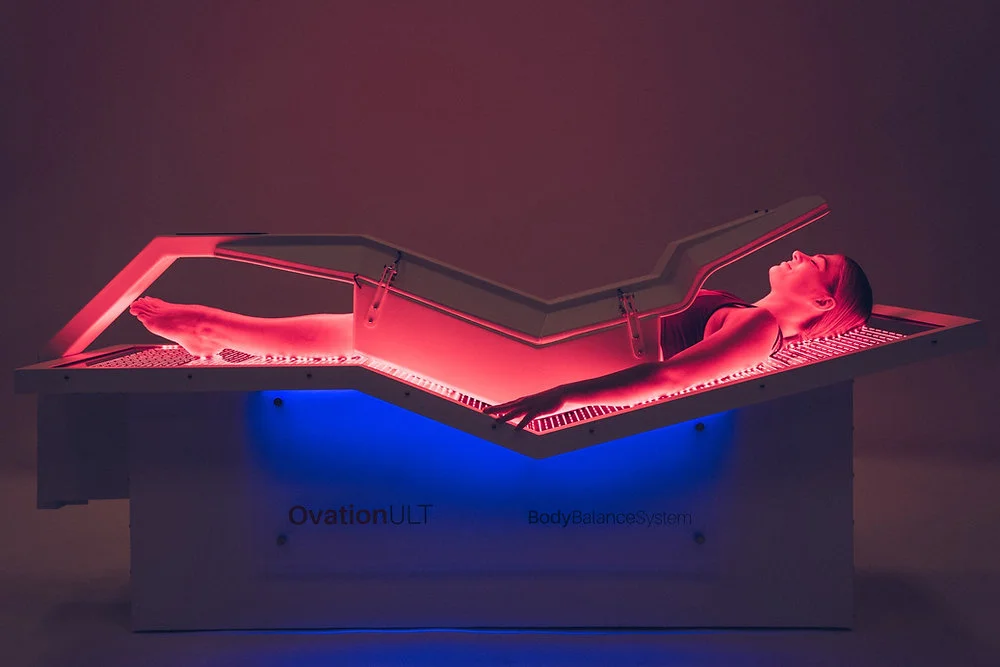
If you've heard patients or friends mention red light therapy lately, you're not imagining a trend. This technology has moved from research settings and elite athletic facilities into everyday clinical care, and for good reason. It has a growing body of evidence behind it, it's non-invasive, and many people find it genuinely helpful for the kinds of things that bring them into a chiropractic office in the first place, such as pain, stiffness, slow tissue healing, and fatigue.
Here's a plain-language breakdown of what it actually does and why it might be worth adding to your care plan.
What Is Red Light Therapy?
Red light therapy (sometimes called photobiomodulation or low-level laser therapy) uses specific wavelengths of red and near-infrared light, typically in the 630 to 850 nanometer range, to penetrate the skin and reach underlying tissue. Unlike UV light from the sun, these wavelengths don't damage skin. They interact with cells in a way that appears to stimulate natural repair and energy production processes.
The key mechanism most researchers point to is the effect on mitochondria, the parts of your cells responsible for producing energy. When certain light wavelengths hit mitochondrial receptors, they seem to increase the production of ATP (cellular energy), reduce oxidative stress, and trigger anti-inflammatory signaling. That's a lot of biological activity from something as simple as sitting near a light panel for a few minutes.
What Conditions Might It Help?
Research is still ongoing, and red light therapy is not a cure-all. But the studies that do exist are encouraging for a range of conditions that chiropractic patients commonly deal with.
Musculoskeletal Pain and Inflammation
Several studies have looked at red light therapy for joint pain, muscle soreness, and conditions like arthritis. The anti-inflammatory effects appear to reduce pain and improve function in some patients, particularly when combined with other treatments. It's not replacing your adjustment, but it may help your body respond to care more effectively.
Tissue and Wound Healing
Red light has been studied in the context of soft tissue injuries, tendinopathies, and post-surgical recovery. Some evidence suggests it can accelerate the repair of damaged tissue by promoting collagen synthesis and improving circulation to the area. For people dealing with lingering sprains, strains, or disc-related issues, that faster healing response can make a real difference in how quickly they progress through care.
Neck and Back Pain
Because so many of our patients come in with spine-related complaints, it's worth noting that red light therapy has been studied specifically for low back and neck pain. Combined with spinal adjustments and other therapies, it appears to offer additional benefit beyond either treatment alone. If you're curious about how it fits with our other chiropractic services, that's a great conversation to have during your visit.
Fatigue and Recovery
Athletes and active people have been using red light therapy for faster muscle recovery, and that benefit extends to everyday patients too. If your body feels slow to bounce back from exertion or even just from the demands of daily life, improved cellular energy production may be part of what you're missing.
What Does a Session Actually Look Like?
Sessions are straightforward and comfortable. You sit or lie near a panel or device that emits the therapeutic wavelengths. There's no heat, no noise, and no discomfort for most people. Sessions typically run anywhere from a few minutes to about 20 minutes, depending on the protocol and what's being targeted. You can often combine it with other therapies on the same visit.
It's not a one-and-done treatment. Like chiropractic care itself, consistency matters. Most protocols involve multiple sessions over a period of weeks, with maintenance visits depending on your goals.
Is It Safe?
For most people, yes. Red light therapy has a strong safety profile. It's non-invasive, doesn't use ionizing radiation, and side effects are uncommon. That said, it's not appropriate for everyone. Certain conditions and medications that increase light sensitivity may be contraindications. Always let your provider know your full health history before starting any new therapy.
How It Fits Into Chiropractic Care
At its best, red light therapy is a complement to a well-rounded care plan, not a standalone fix. It works well alongside spinal adjustments, decompression, and soft tissue work because it addresses the cellular environment your healing happens in. When your cells have better energy and less inflammation, the work your chiropractor does tends to hold better and progress faster.
If you've been dealing with pain that isn't resolving as quickly as you'd like, or if you're looking for ways to support your recovery between visits, red light therapy is worth asking about. Reach out to our office and we can talk through whether it's a good fit for what you're dealing with.